Consumer Duty Governance, Outcome MI and SM&CR Assurance

Outcome evidence under Principle 12 and PRIN 2A
Under FCA Principle 12 and PRIN 2A, compliance is no longer a policy that says the firm acts to deliver good outcomes. For an SMF holder, a non-executive director, or the board of a pension operator, a wealth manager or an Appointed Representative network, the question is whether the management information shows the outcome the customer actually received.
A count of cases closed, trades placed, or training modules completed does not answer that question. The record has to show whether the fee was matched by a review, how long a drawdown instruction sat out of the market, whether a statutory notice went out in time, and whether a fixed administration charge is consuming a small pot.
The notes linked below are the detailed tests. This page is how they fit a Consumer Duty governance framework: outcome management information, operational friction, and the board report.
Three streams
| Outcome MI | Sludge and foreseeable harm | Board governance |
|---|---|---|
| Service delivered against the fee taken | Disinvestment and settlement lag | The annual assessment under PRIN 2A.8 |
| Review ratios by adviser and AR firm | The 31-day flexible-access statement | Distribution-chain fee drag |
| A root-cause taxonomy, not a complaint count | Exit friction on a transfer out | Vulnerable-customer interventions, not training completion |
Who the record is written for
Boards and non-executive directors
PRIN 2A.8 requires the governing body to review outcome monitoring at least annually and to approve the report. A director who signs that report on activity statistics has not reviewed the outcomes.
SMF16, SMF1 and SMF3
The duty of responsibility asks what reasonable steps the senior manager took. A dashboard that cannot be tied to a customer cohort is a weak answer.
Network principals
An Appointed Representative book can keep deducting ongoing charges after the annual review has stopped. SYSC does not let the principal treat that as the AR’s private problem.
Platforms, SIPP operators and discretionary managers
The harm is often in the middle office: a dealing queue, a payroll batch, a fixed trustee fee on a pot the target market no longer fits, or a model-portfolio charge stack the client cannot see.
From activity statistics to outcome metrics
| Domain | Activity figure | Outcome figure | What it is there to catch |
|---|---|---|---|
| Ongoing servicing and AR networks | Pounds collected in recurring adviser charges | The share of fee-paying accounts with a completed annual suitability review in the last 12 months, split by firm | Fee for no service under PRIN 2A.4, and principal liability under SYSC |
| Disinvestment and drawdown | Trades placed within 48 hours | Calendar days from a clean instruction to cleared money in the client's bank account | Foreseeable harm under PRIN 2A.2 while the client is out of the market |
| Statutory pension notices | Disclosures stored on the client portal | The share of flexible-access events where the Regulation 14BA statement went out within 31 days | A missed MPAA warning, and a failure of PRIN 2A.5 |
| Model portfolios and CIPs | Performance matches the factsheet | Cumulative drag from adviser, discretionary, platform and fund charges, against the target market | Price and value under PRIN 2A.4, and drift under PROD |
| Complaints | Cases closed inside the eight-week DISP limit | Upholdings tagged to platform lag, charging, or a missed vulnerability flag | A repeating cause under DISP 1.3 |
| Vulnerable customers | Staff completed the annual module | The share of flagged accounts with a documented adaptation or a different handling path | Support failures under PRIN 2A.6 |
A book can show 98% of tasks inside the service standard and still be taking ongoing fees from clients who have had no review. That is the green-dashboard problem. The annual report is only as good as the segmentation underneath it.
Pensions decumulation and operational friction
PRIN 2A.2 and PRIN 2A.6 are where a middle-office delay becomes a conduct issue. In accumulation, a slow trade is friction. In drawdown, the same delay can leave a retiree out of the market, or waiting on a payroll batch, while the operations report says the trade was placed on time.
Drawdown lag
A “95% of trades within 48 hours” figure stops at the dealing desk. The client is measuring the days from the instruction to money in the bank: validation, execution, fund settlement, the payroll run, then the payment. An all-or-nothing lock, which holds liquid proceeds until the slowest asset settles, is a design choice. It is also a foreseeable out-of-market period.
The full note is Decumulation Telemetry: Tracking SIPP Drawdown Lag as Foreseeable Harm.
The 31-day flexible-access statement
The Money Purchase Annual Allowance is triggered when taxable income is paid, not when the form is signed and not when units are sold. Regulation 14BA of the Registered Pension Schemes (Provision of Information) Regulations 2006 (SI 2006/567) gives the scheme administrator 31 days from that payment to issue the flexible-access statement. A PDF left in a portal, with no alert, does not tell the member that a 91-day duty to notify other schemes has started, or that a failure to notify can bring an HMRC penalty under section 98 of the Taxes Management Act 1970.
The full note is The 31-Day MPAA Trap: Monitoring Statutory Trigger Disclosures in Flexi-Access Drawdown.
Fixed fees on a small pot
A flat trustee charge that is immaterial on a £250,000 SIPP can be several % of a residual pot after drawdown, a pension-sharing order, or a partial transfer. PRIN 2A.4 looks at the cohort, not the average fee across the whole book. An average that is “0.23% of assets” can hide a band of small pots whose administration charge is consuming the return.
The full note is Fixed-Fee Erosion in Low-Value SIPP Pots: When Administration Fees Breach Fair Value.
Distribution chains, networks and the board pack
The same test applies where the draft file does not yet have a separate note.
A discretionary model portfolio is not fairly priced because the factsheet matches the model. PRIN 2A.4 asks for the stack: adviser retainer, discretionary fee, platform custody, and the fund’s own charges and transaction costs. A centralised investment proposition is not on-target because the model rebalanced. The question is whether the client’s tested capacity for loss still sits inside the target market under PROD.
For a network principal, second-line monitoring has to see review delivery by Appointed Representative, not a network average. Where the client does not respond to the annual review, the file needs a recorded escalation and a point at which the fee stops. Repeated wet-signature demands and manual delays on a transfer out are exit friction under PRIN 2A.6, not a thorough process.
Complaint files are the raw material for that monitoring. A falling count is not a root cause. The method for turning casework into board information is Turning FOS Casework into Consumer Duty Root-Cause MI.
Before a non-executive signs the annual assessment, the pack should show the segmented figures above, the tolerance that turns a measure amber or red, and what changed in the control after the last red. A narrative that restates the policy does not do that.
When the framework is tested
- The annual board assessment. The evidence pack under PRIN 2A.8, not a restatement of the Consumer Duty policy.
- A change of reporting. Risk-committee papers that still lead with volumes, SLAs and training completion.
- A migration, an acquisition, or a new centralised proposition. New books are where unserviced cohorts, fee drag and transfer friction appear.
- A data request. Ongoing-service rates, distribution-chain pricing, or what actually happened on accounts flagged as vulnerable.
How the information is built
1. Read the feeds
CRM diaries, dealing timestamps, billing ledgers and complaint files, rather than the slide that summarises them.
Then
2. Walk the journey
Drawdown, transfers out, bereavement and vulnerable-customer handling, timed from the client's instruction to the client's money.
Then
3. Set the tolerance
A red, amber or green threshold on each outcome measure, with a named escalation to the senior manager.
Then
4. Keep it current
First and second line own the feed. The narrative explains a movement. It does not replace the number.
Then
5. The board pack
The annual assessment is the segmented record, the breaches of tolerance, and the remedy, ready for a director to sign.
Summary
Principle 12 and the Senior Managers and Certification Regime are judged on outcomes that can be checked, not on a dashboard that stays green. The tests above are how ongoing fees, drawdown delays, statutory notices, small-pot charges and complaint patterns are read before a supervisor, a Skilled Person or the Ombudsman reads them first.
Where the need is an outcome-MI review, support for the annual assessment, or a look at drawdown and servicing journeys, the place to start is the contact page.
Other insights

Decumulation Telemetry: Tracking SIPP Drawdown Lag as Foreseeable Harm
1 November 2026 , 9 min
A 48-hour dealing SLA can hide three or four weeks between a drawdown instruction and cleared money. That gap is a foreseeable-harm question under PRIN 2A.2.
Read article
The 31-Day MPAA Trap: Monitoring Statutory Trigger Disclosures in Flexi-Access Drawdown
1 November 2026 , 8 min
The Money Purchase Annual Allowance starts when taxable income is paid. The scheme administrator then has 31 days to tell the member. A document sitting in a portal is not that notice.
Read article
Fixed-Fee Erosion in Low-Value SIPP Pots: When Administration Fees Breach Fair Value
1 November 2026 , 8 min
A flat trustee fee that is trivial on a large SIPP can consume several % of a residual pot. PRIN 2A.4 looks at that cohort, not the average charge across the book.
Read article
Strategic FOS Defence, Dispute Resolution and Forensic Redress Modelling
27 October 2026 , 11 min
A practical account of high-stakes complaints: eight-week final responses, DISP 2.8 time-bars, preliminary-view rebuttals and redress modelled to the FCA benchmarks.
Read article
The Jurisdictional Shield: Enforcing DISP 2.8 Time Limits Against Stale Claims
26 October 2026 , 4 min
A complaint about advice given eight or ten years ago is often a jurisdiction question before it is a suitability question. DISP 2.8.2R is the test.
Read article
Rebutting the Ombudsman Investigator's Preliminary View: The Mechanics of an Effective Escalation
26 October 2026 , 4 min
An adverse preliminary view is not the decision. It is a document that can be taken apart where it uses hindsight or misreads the product.
Read article
The 8-Week Final Response Letter: Drafting for the Ombudsman, Not Just the Client
26 October 2026 , 4 min
The eight-week letter is the brief the Ombudsman will read. An apology that concedes a breach is very hard to row back.
Read article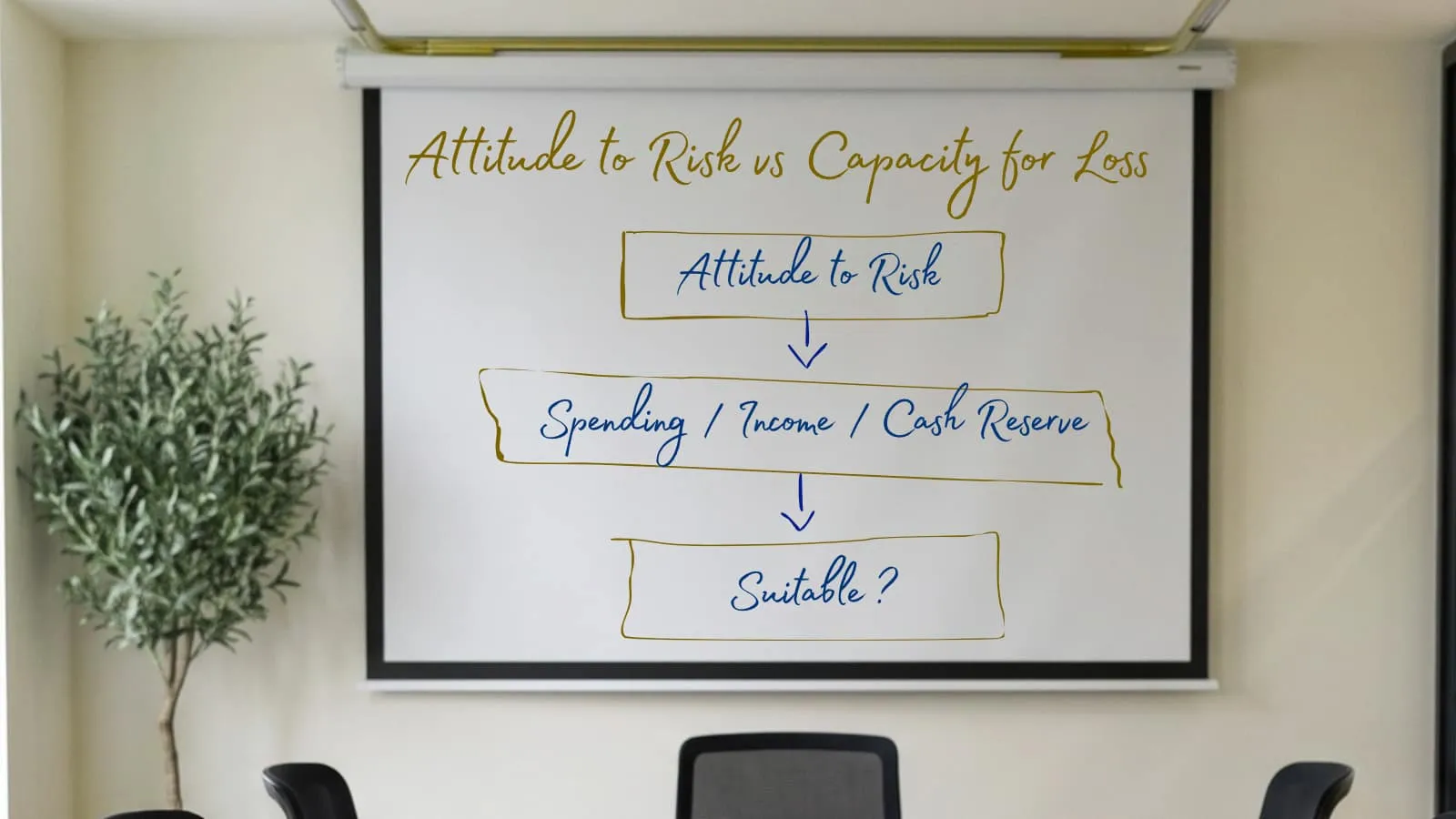
Attitude to Risk vs Capacity for Loss: Winning the Battle of Contemporaneous Evidence
26 October 2026 , 4 min
A signed risk questionnaire does not answer a complaint about losses. Capacity for loss, recorded at the time, does.
Read article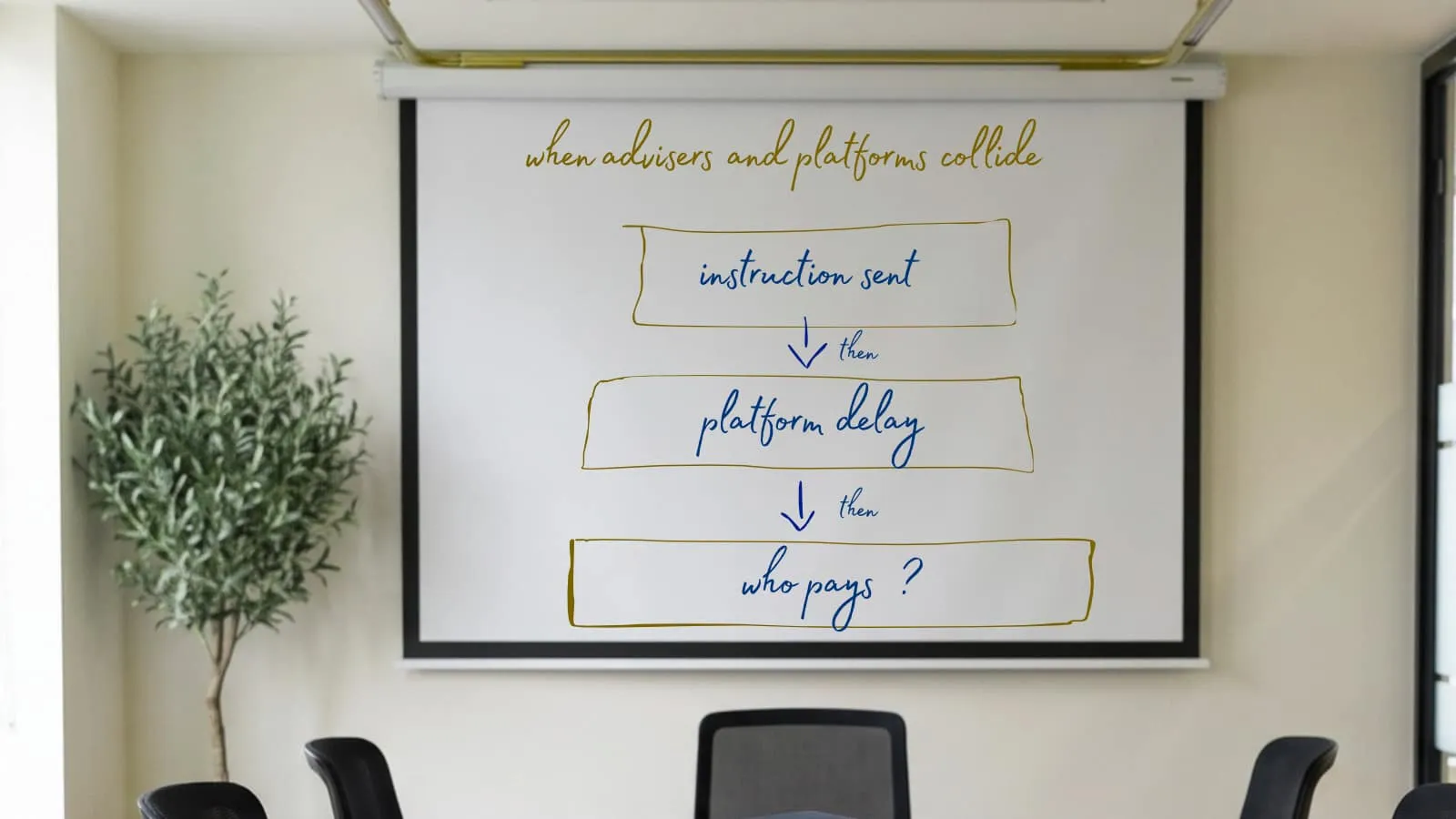
When Advisers and Platforms Collide: Defending the Boundaries of Intermediary Responsibility
26 October 2026 , 4 min
A dealing backlog at the platform is not, by itself, an advice failure. The timeline shows who had the instruction, and when.
Read article
Halting Regulatory Retrospectivity: Defending Legacy Advice Against Post-Consumer Duty Claims
26 October 2026 , 4 min
Consumer Duty language in a complaint about pre-2023 advice does not rewrite the rules that applied on the day. DISP 3.6.4R keeps the case in its own time.
Read article
SIPP Custody vs Advisory Due Diligence: Applying Adams v Options UK to Intermediary Disputes
26 October 2026 , 5 min
When a SIPP asset fails, the operator's duty and the adviser's duty are not the same duty. Adams v Options UK does not merge them.
Read article
Turning FOS Casework into Consumer Duty Root-Cause MI: Complaints as Governance Telemetry
26 October 2026 , 4 min
A falling complaint count is not root-cause information. DISP 1.3 and the Consumer Duty board report ask what kept going wrong.
Read article
Beyond Simple Cash Differences: Why Generalist Accounting Fails FCA Redress Benchmarks (FG17/9)
26 October 2026 , 4 min
Money in minus money out is not a pension redress calculation. FG17/9 and DISP App 1 require the position the client would have been in.
Read article
The Month 1 Emergency Tax Trap: Assessing True Detriment vs Temporary Cashflow Drag Under Code 1257L M1
26 October 2026 , 4 min
A Month 1 tax code can withhold thousands on a first drawdown payment. Most of that money is reclaimable. It is not automatically redress.
Read article
Benchmarking Distress and Inconvenience: Defending Against Exaggerated Non-Financial Detriment Claims
26 October 2026 , 4 min
A demand for £5,000 to £10,000 of upset, attached to an ordinary delay, sits outside the Ombudsman's published bands. The log is what places the case.
Read article
Forensic File Reviews, Complex Pension Scrutiny and Ongoing Servicing Audits
22 October 2026 , 12 min
A forensic file review tests defined benefit transfers, high-risk SIPPs and ongoing charges against COBS, SYSC and the Consumer Duty, before a regulator or ombudsman does.
Read article
Financial Crime & Unauthorised Intermediary Funnels: Spotting the "Introducer" Red Flags
20 October 2026 , 6 min
The unregulated introducer model has driven SIPP provider failures and FSCS levies for two decades. Toxic funnels leave repeatable footprints that a structured red-flag audit can find.
Read article
Decumulation Friction: Phased Drawdown, In-Specie Transfers, and Illiquid Asset Traps — When It's Not So Straightforward
18 October 2026 , 6 min
In bespoke SIPPs holding property, unquoted equities or loan notes, pension flexibility is often theoretical. Crystallising benefits without a clear cash pathway creates operational drag, Consumer Duty breaches and complaints.
Read article
SIPP Borrowing & Commercial Property: Navigating the 50% Net Asset Cap and Connected-Party Leases
16 October 2026 , 5 min
Commercial property in a SIPP or SSAS sits under intense HMRC scrutiny. Breaching the 50% borrowing cap or tolerating connected-party rent arrears triggers punitive unauthorised payment charges.
Read article
Auditing Illiquidity and Valuation: The 30-Day Standard Asset Test Under SIPP Capital Adequacy Rules
14 October 2026 , 5 min
Labelling illiquid investments as standard assets suppresses a SIPP operator's capital requirement on paper. A forensic liquidity audit tests every asset against the 30-day gate.
Read article
SIPP Operator Due Diligence: Lessons from Adams v Options UK and the FCA Due Diligence Framework
12 October 2026 , 6 min
An execution-only disclaimer no longer shields a SIPP operator. After Adams v Options UK, reviewers ask whether the operator actively vetted the asset and the distribution channel before accepting it.
Read article
Abridged Advice vs Full Advice: Managing the Boundary Under COBS 19.1A
10 October 2026 , 5 min
Abridged advice can only ever produce two outcomes. Firms that blur the boundary into full advice risk breaching the contingent charging ban and issuing invalid Section 48 confirmations.
Read article
The DBAAT File Audit: Scoring Section 166 Redress Liabilities Before the Regulator Arrives
8 October 2026 , 5 min
The FCA reviews defined benefit transfer books with the DBAAT, not narrative impressions. A single gate failure on capacity for loss or information gathering can render the whole advice outcome unsuitable.
Read article
Unpacking Scheme Solvency: Handling Employer Covenants and PPF Nuance Under COBS 19.1.2DG
6 October 2026 , 4 min
Employer covenant weakness is often used to justify an otherwise unsuitable defined benefit transfer. COBS 19.1.2DG sets clear limits on how scheme solvency and PPF compensation are presented.
Read article
Stress-Testing the APTA & TVC: When Stochastic Cashflow Models Cross into "Wishful Thinking"
2 October 2026 , 5 min
Cashflow modelling is one of the most heavily scrutinised parts of a defined benefit transfer file. Optimistic stochastic models are often used to paper over structural cracks in transfer sustainability.
Read article