AI Suitability & 100% File Auditing: What SMF16s Must Test Before Relying on RegTech MI

Across UK wealth management, financial advice networks, and SIPP operations, compliance leaders are rapidly adopting AI-driven conversation intelligence and automated quality assurance tools. Platforms such as Aveni (Aveni Assist and Aveni Detect) and Recordsure promise to replace traditional 1–3% sample file checking with 100% interaction capture, automated suitability report drafting, and instant vulnerability flagging.
For Senior Management Function holders—particularly SMF16 (Compliance Oversight) and SMF1 (Chief Executive)—the appeal is obvious. Under Principle 12 and PRIN 2A, the FCA expects contemporaneous, data-led proof that retail customers experience fair value and avoid foreseeable harm.
However, buying RegTech does not transfer regulatory accountability. How could it?
Under SM&CR and SYSC, an SMF16 cannot outsource “reasonable steps” to an algorithm. In our file reviews and governance audits, we see a growing risk: firms treating uncalibrated AI risk flags as proof of compliance—creating a high-tech version of the “Green Dashboard” illusion.
So, before relying on AI-generated suitability reports or automated QA telemetry in your board pack, stress-test your operating model against four regulatory realities.
1. The Suitability Drafting Trap (COBS 9 & PRIN 2A.5)
AI meeting assistants (such as Aveni Assist) excel at transcribing client meetings, extracting fact-find data, and structuring first-draft suitability reports. Used properly, they eliminate administrative bottlenecks and improve consistency.
Where AI stops and judgement begins:
- The “Justification Gap” in Pension Switching: An AI model can neatly summarise why a client wants to consolidate three legacy pensions into a modern SIPP. What it rarely challenges is whether moving out of a low-cost Qualifying Workplace Pension Scheme (QWPS) or sacrificing a Guaranteed Annuity Rate (GAR) actually justifies higher ongoing platform and DFM charges under COBS 19 and PRIN 2A.4. And if a complaint is escalated to the FOS it will undoubtedly instigate its inquisitorial remit and will it take the simple view: ‘were the higher costs justified after the switch?’
- Boilerplate Rationales: Large language models naturally produce fluent, persuasive prose. To an untrained reviewer, an AI-drafted rationale looks thorough; to a Financial Ombudsman Service (FOS) investigator, generic reasoning that fails to stress-test Capacity for Loss in pounds and pence against non-discretionary expenditure floors is an immediate uphold. Likewise, misaligned ATRs with resultant out of line recommended portfolios will undoubtedly result in an uphold and investment comparison requested.
The SMF16 Test: Audit a sample of AI-assisted suitability reports specifically for omitted trade-offs. Does the report clearly articulate why the client should not proceed, or has the AI smoothed over material cost and guarantee disadvantages? Keep in mind AI language models are the epitome of the ‘Yes Man/Woman’ until they smooth out.
2. “Meeting Held” vs. Substantive Annual Review (PRIN 2A.4)
Under the FCA’s ongoing servicing scrutiny, firms must prove that recurring Ongoing Adviser Charges (OAC) match a genuine, delivered service. Automated call-monitoring tools (such as Aveni Detect) can verify that an annual review call took place and lasted 45 minutes.
The regulatory blind spot:
- Courtesy Catch-Ups vs. Suitability Reassessments: A 45-minute conversation discussing market headlines and family holidays is not a compliant annual review. Under COBS 9A and PRIN 2A.4, a substantive review must evidence that the adviser refreshed the client’s objectives, Attitude to Risk (ATR), Capacity for Loss, and tax allowances, and re-confirmed that the investment proposition remains suitable.
- The Unresponsive Client Cohort: Automated interaction tracking only analyses calls that happen. Your telemetry must still cross-reference your billing ledger against CRM records to identify fee-paying clients with zero interaction—and enforce a strict stop-clock protocol where fees are paused if clients fail to engage.
The SMF16 Test: Configure your QA rubric to distinguish between contact logged and suitability re-confirmed. Never allow raw meeting volume to masquerade as Fair Value MI.
3. Vulnerable Customer Detection vs. Actionable Adaptation (PRIN 2A.6 & FG21/1)
Modern voice-analytics engines are remarkably effective at flagging acoustic hesitation, confusion, or keywords linked to bereavement, health shocks, or financial distress.
The regulatory blind spot:
- Flagging Is Not Supporting: Detecting a vulnerability indicator on a call transcript—and leaving that flag sitting unactioned in a compliance dashboard—actually increases regulatory exposure. Under PRIN 2A.6, if your firm’s own system recorded that a client was experiencing cognitive decline or recent bereavement prior to a major pension crystallisation, and no safeguarding adaptation followed, that record becomes contemporaneous evidence of foreseeable harm.
- To put this another way: if a subsequent complaint is made (either first-party or via a representative) after pension income was withdrawn and squandered due to a direct connection to that identified vulnerability—how would a reasonable assessment conclude when the firm’s own AI system contemporaneously flagged the risk?
The SMF16 Test: Pair every AI vulnerability alert with a mandatory second-line verification metric: Intervention Audit Rate—the percentage of flagged calls where the adviser or administrator documented a concrete adjustment (e.g., pausing a transaction, involving a trusted third party, or issuing plain-English follow-up summaries).
4. Calibrating AI Flags into Defensible Board Telemetry (PRIN 2A.9)
Raw AI outputs generate thousands of micro-alerts across a mid-sized wealth manager or Appointed Representative (AR) network. Dumping raw alert counts into a Risk Committee pack overwhelms Non-Executive Directors and obscures systemic conduct trends.
To turn automated interaction data into defensible Consumer Duty Outcome MI, firms need three calibration layers:
| Telemetry layer | What the RegTech tool provides | What independent calibration adds |
|---|---|---|
| Interaction Capture | 100% call transcription, keyword tagging, and initial risk scoring. | Validation of whether complex pension rules (DBAAT, MPAA, GARs) were accurately applied. |
| File Grading | Automated pass/fail flags based on script and disclosure checklists. | Alignment to a defensible 4-Tier Regulatory Rubric (Tier 1 Suitable to Tier 4 Detriment) calibrated to FOS standards. |
| Board Escalation | Aggregated alert volumes and adviser league tables. | Red/Amber/Green (RAG) tolerances and root-cause taxonomies linking flags to remediation actions. |
Where Software Stops and Governance Begins
AI conversation intelligence and automated QA platforms are major leaps forward for retail financial services. Used alongside disciplined governance, they allow compliance teams to spot conduct drift across AR networks and advisory books months earlier than traditional sampling ever could.
However, technology is an input to governance—not a substitute for it. When the FCA or a Skilled Person inspects a firm, they do not ask which software vendor you bought. They ask how your SMF holders calibrated the rules, tested the outputs, and remediated the underlying files.
Stress-Test Your QA & Outcome MI Framework
At Compass Compliance Consulting, we help wealth managers, IFA networks, and SIPP operators bridge the gap between automated compliance tooling and defensible regulatory governance. Led by a CISI Level 6 Pension Transfer Specialist (MCSI) and former Financial Ombudsman Service Investigator, we provide independent file calibration, ongoing fee reconciliations, and board-ready Consumer Duty MI audits.
Other insights

CP26/20 & Post-Options SIPP Due Diligence: Why "Execution-Only" Disclaimers Will No Longer Save Operators or Introducers
15 November 2026 , 5 min
With FCA Consultation Paper CP26/20 replacing non-Handbook guidance (FG 13/8) with binding Handbook rules and a new Pension Scheme Money and Assets (PSM&A) regime, execution-only disclaimers no longer insulate SIPP operators from PRIN 2, COBS 2.1.1R, Consumer Duty, or Section 27 FSMA unenforceability. Here is what recent FOS decisions and CP26/20 require Boards and SMF16s to evidence.
Read article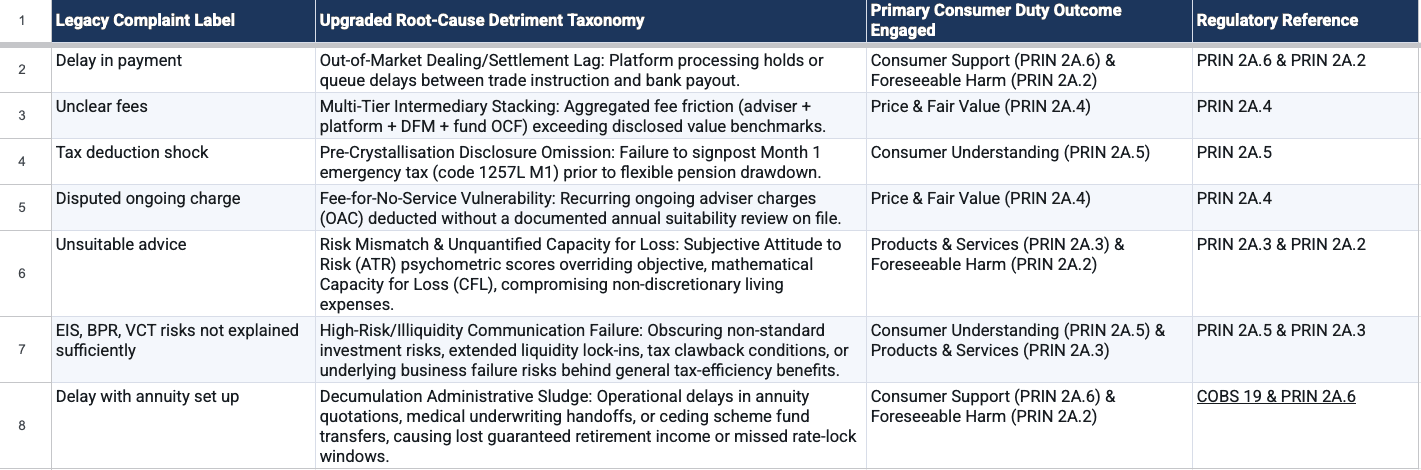
The Complainer: Turning Customer Grievances into an Active Consumer Duty Control Framework
10 November 2026 , 5 min
By building a robust control framework that links root-cause analysis, foreseeable harm assessments, and outcome testing directly into product oversight and board governance, firms do more than satisfy PRIN 2A—they insulate their balance sheets, protect senior management from personal regulatory liability, and build a genuinely resilient financial services business.
Read article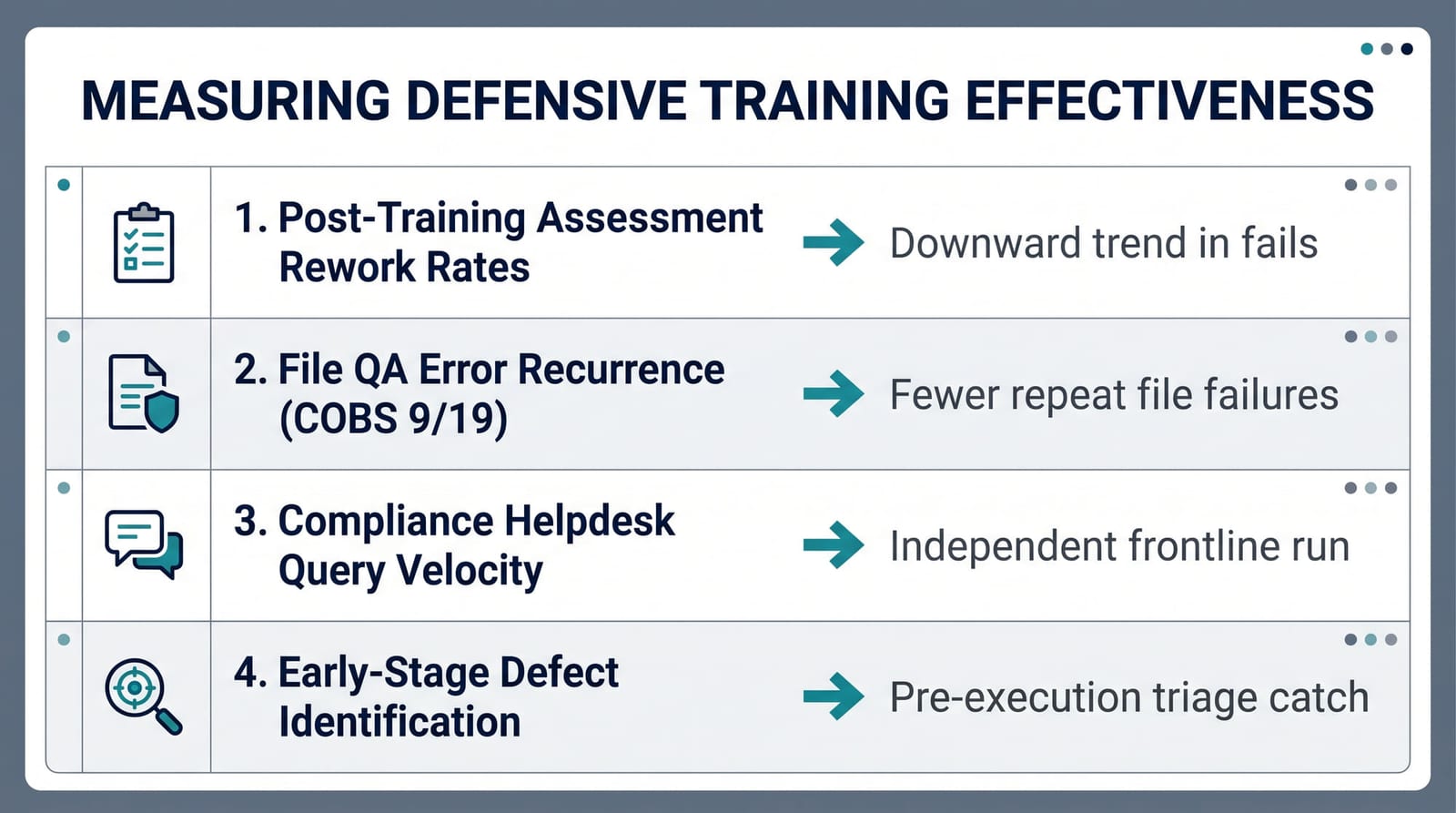
Beyond the Checkbox: Developing and Delivering Compliance Training That Actually Mitigates Risk
9 November 2026 , 5 min
Training is not a once-a-year disruption; it is the first line of defence in your operational governance framework. When aligned with your firm's second-line file reviews and SM&CR reporting, practical education protects your regulatory permissions and insulates senior management from personal liability.
Read article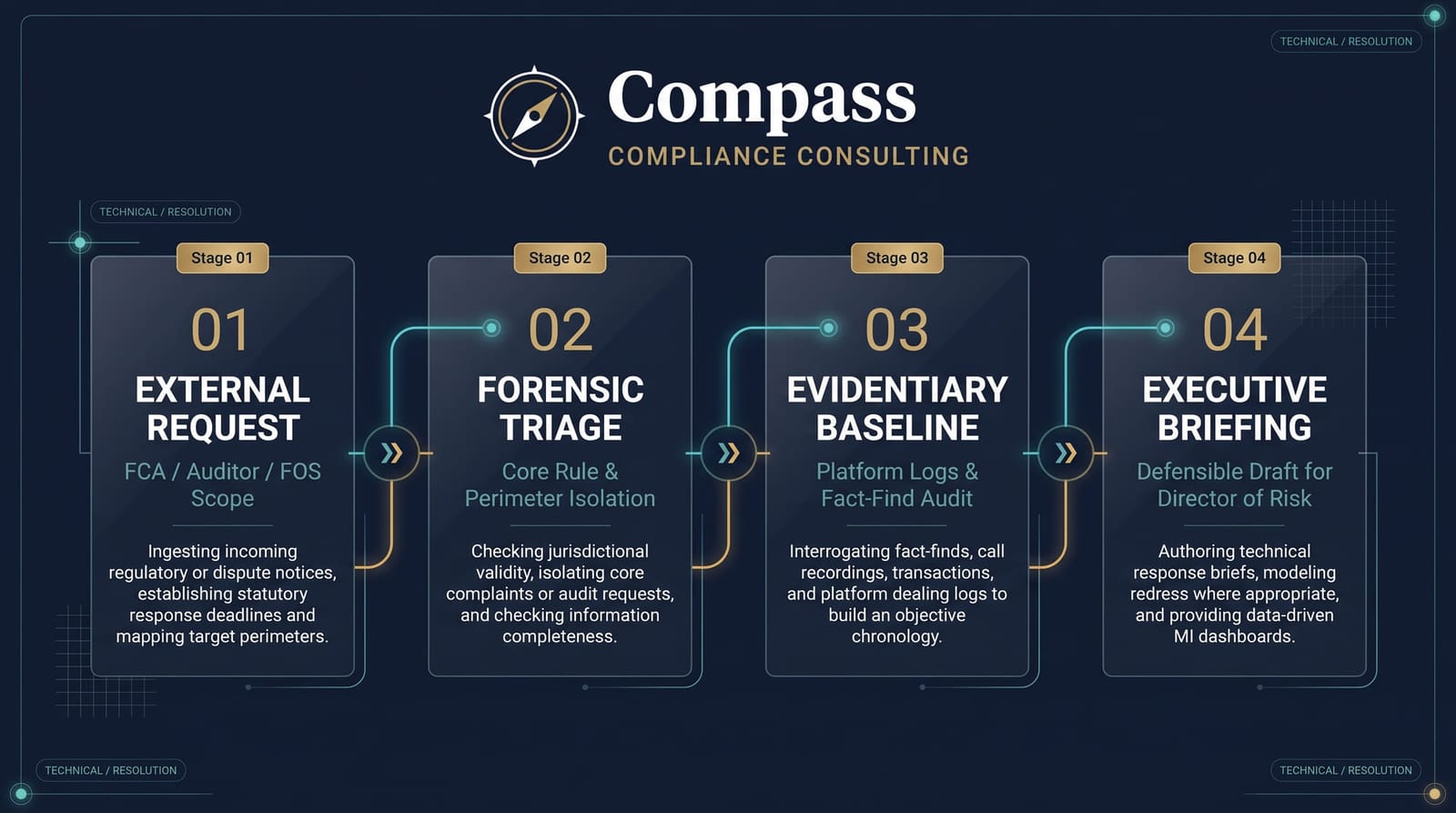
Bridging the Technical Gap for the Director of Group Risk
9 November 2026 , 5 min
By providing rigorous technical support to the Director of Group Risk, the compliance function ensures external stakeholders receive authoritative, evidence-backed submissions that protect the firm's authorisations and reputation. Simultaneously, it ensures operational teams receive practical clarity, maintaining compliant, defensible business practices across the entire organisation.
Read article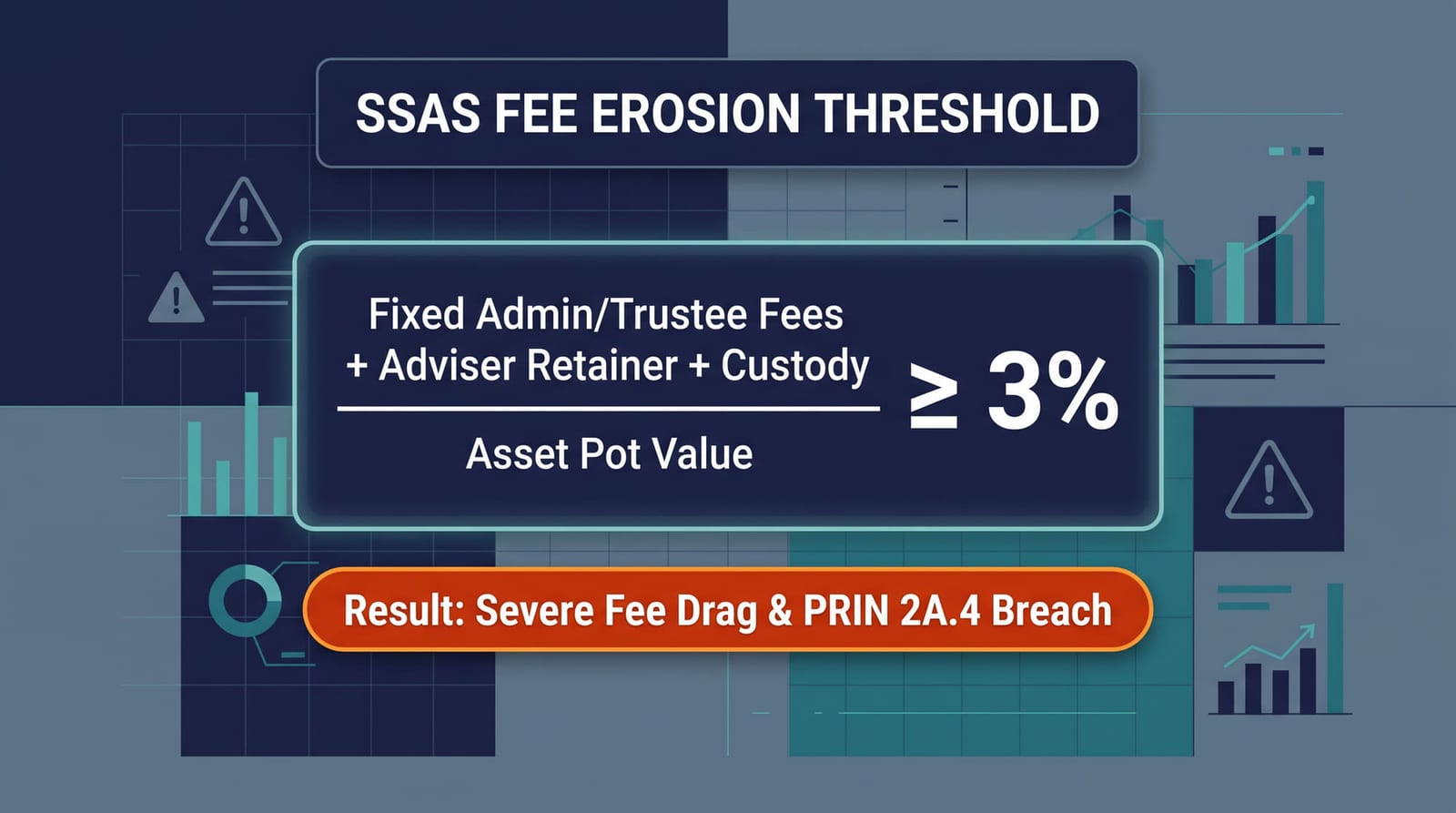
Consumer Duty and SSAS: 5 Critical Operational Impacts
8 November 2026 , 5 min
The distinction between an occupational trust and a personal pension wrapper does not exempt regulated firms from retail conduct expectations. Whether structuring the initial scheme, selecting underlying investments, or auditing ongoing fee extraction, firms servicing SSASs must embed data-driven outcome monitoring to prove their clients receive fair value and avoid foreseeable harm
Read article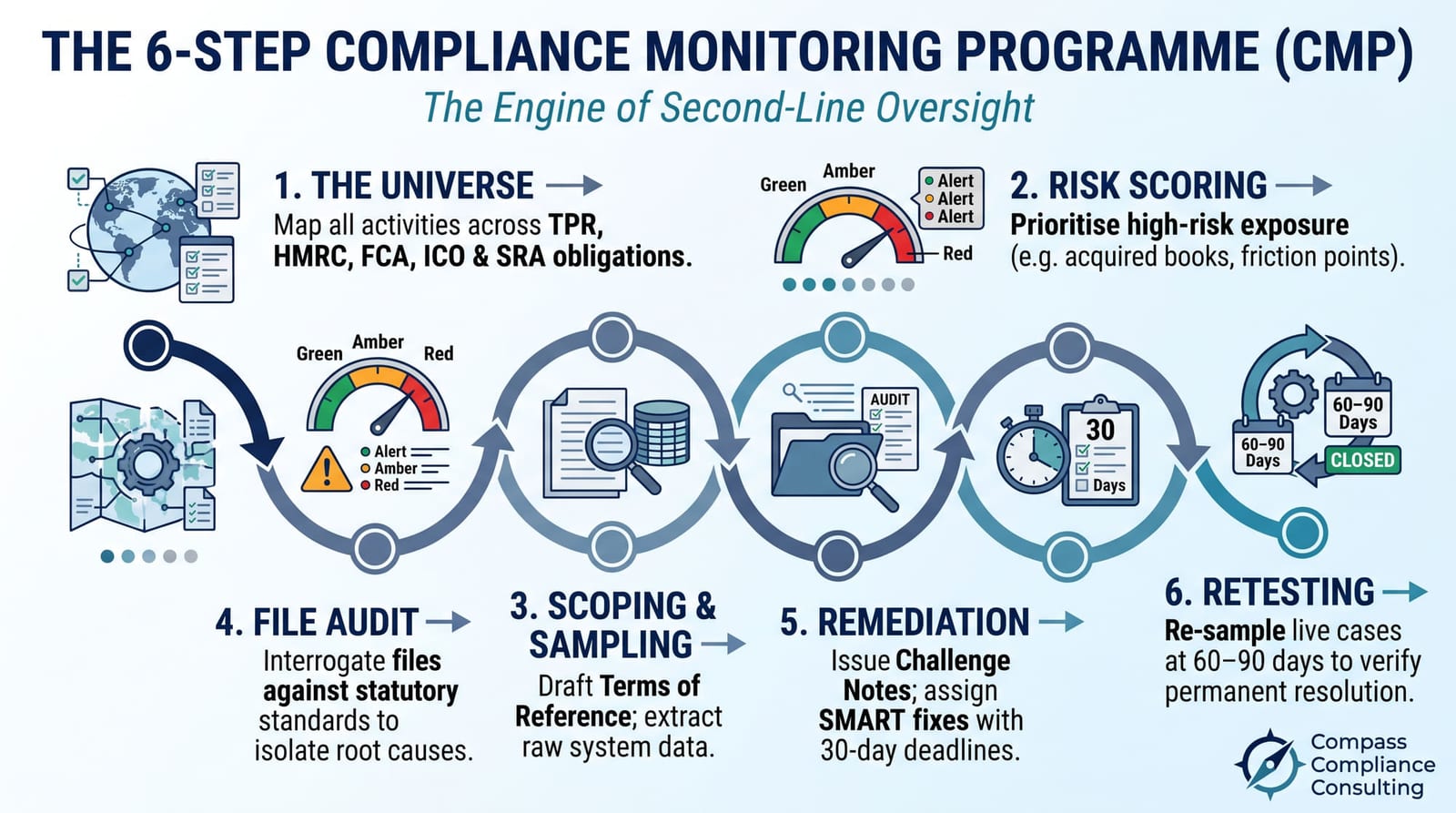
Demystifying the Compliance Monitoring Programme (CMP)
8 November 2026 , 5 min
An effective compliance framework does not treat regulatory obligations in isolation. The testing methodologies, root-cause diagnostics, and remediation loops that drive a successful Compliance Monitoring Programme apply directly across all high-stakes governance areas—including data protection, client privacy, and statutory information security.
Read article
Navigating UK GDPR and Data Protection in Practice
7 November 2026 , 5 min
Data protection is not an isolated legal duty; it is a foundational component of operational resilience and consumer trust. Embedding these disciplines ensures firms protect both their clients from harm and their business from regulatory enforcement.
Read article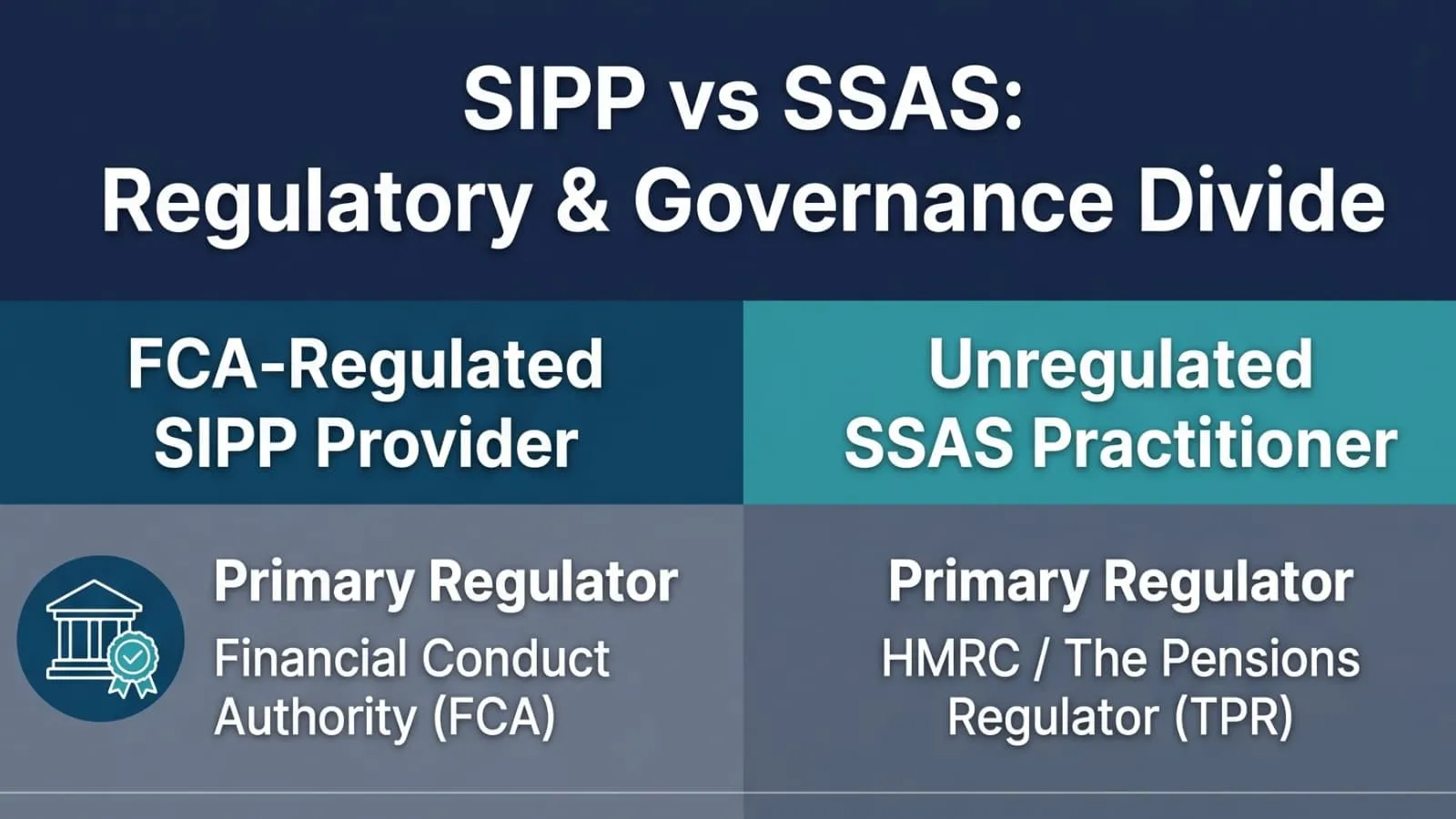
The Regulatory Blindspot: Why Unregulated SSAS Promoters Risk Massive Tax Bombs Under Consumer Duty Scrutiny
7 November 2026 , 5 min
Responsible SSAS providers already operate high-standard governance models, including structured annual trustee meetings to align member strategies with current rules. Bringing the entire SSAS sector under FCA regulation may create an even playing field
Read article
Consumer Duty Governance, Outcome MI and SM&CR Assurance
1 November 2026 , 11 min
Principle 12 asks for contemporaneous proof of customer outcomes. Activity statistics, dealing SLAs and a green dashboard do not provide it.
Read article
Decumulation Telemetry: Tracking SIPP Drawdown Lag as Foreseeable Harm
1 November 2026 , 9 min
A 48-hour dealing SLA can hide three or four weeks between a drawdown instruction and cleared money. That gap is a foreseeable-harm question under PRIN 2A.2.
Read article
The 31-Day MPAA Trap: Monitoring Statutory Trigger Disclosures in Flexi-Access Drawdown
1 November 2026 , 8 min
The Money Purchase Annual Allowance starts when taxable income is paid. The scheme administrator then has 31 days to tell the member. A document sitting in a portal is not that notice.
Read article
Fixed-Fee Erosion in Low-Value SIPP Pots: When Administration Fees Breach Fair Value
1 November 2026 , 8 min
A flat trustee fee that is trivial on a large SIPP can consume several % of a residual pot. PRIN 2A.4 looks at that cohort, not the average charge across the book.
Read article
The CETV Mirage: Why 2026 Multiples Look Nothing Like the 2021 Peak (And Why That Makes Advice Harder)
20 November 2026 , 5 min
UK DB pension CETV multiples have dropped from 30x–40x in 2021 to 18x–22x in 2026 due to higher gilt yields. Here is why lower transfer values actually raise the mathematical bar for suitability under COBS 19 and DBAAT file reviews.
Read article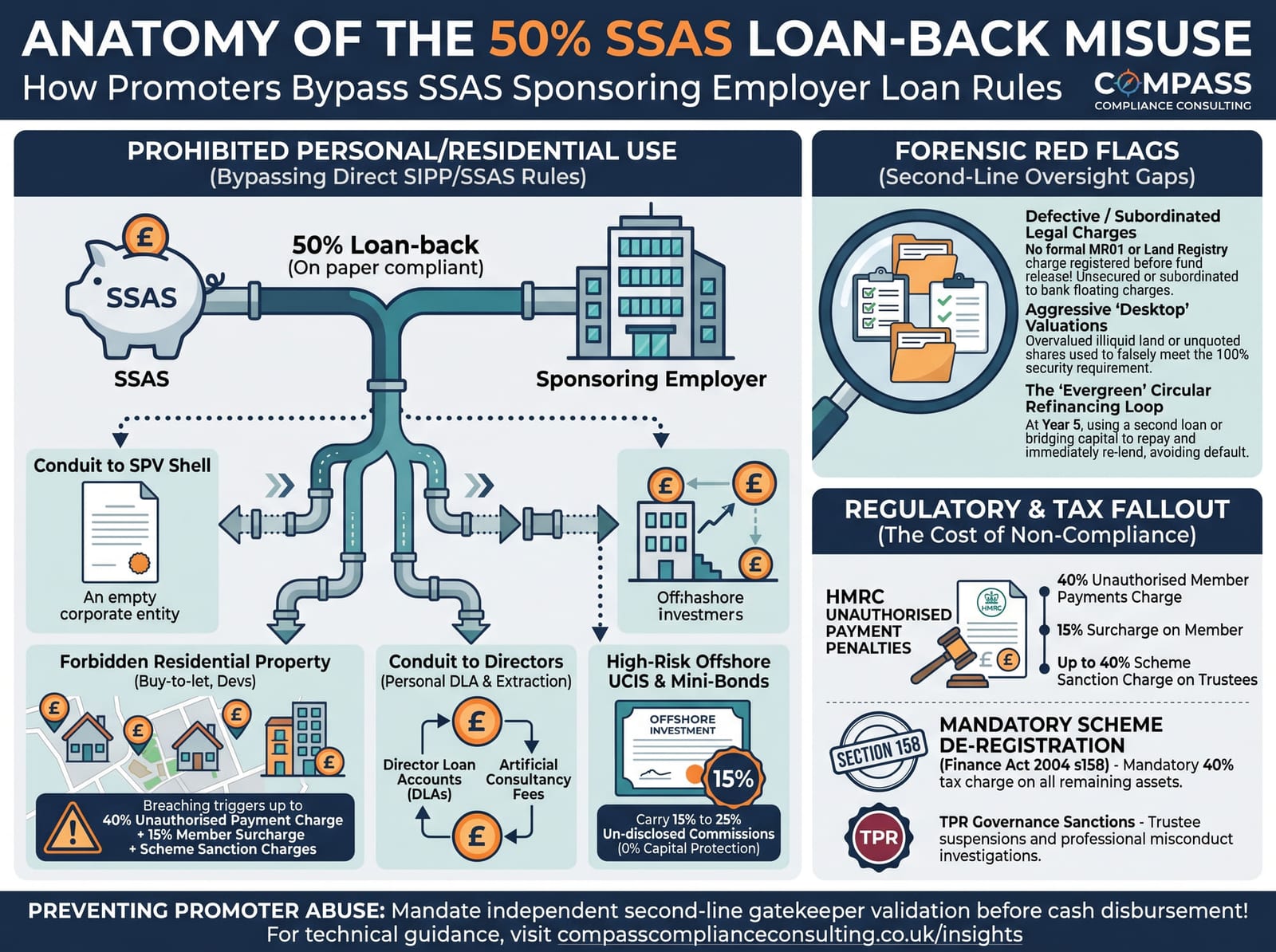
The Sponsoring Employer Conduit: Anatomy of the 50% SSAS Loan-Back Misuse
11 November 2026 , 5 min
The statutory loan rules under Schedule 30 of the Finance Act 2004 govern only the primary transaction between the SSAS trustees and the sponsoring employer. Promoters exploit this legal boundary by treating the borrowing employer as a pass-through conduit.
Read article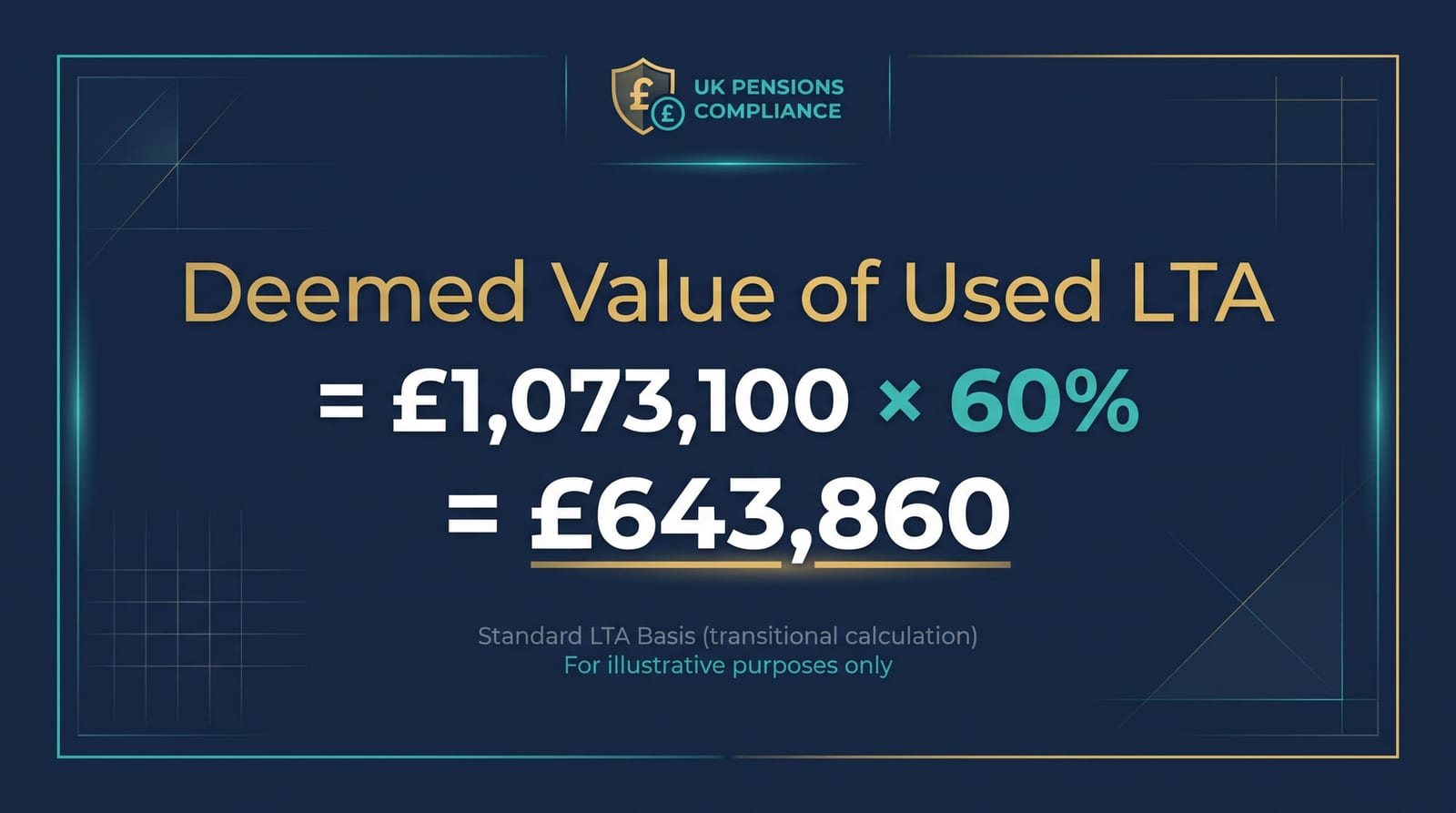
How to Research and Frame Genuine Technical Pensions Enquiries
9 November 2026 , 5 min
Technical support exists to resolve genuine legislative ambiguities, unusual cross-border issues, structural scheme rule defects, and high-risk regulatory conflicts. By researching first and applying the Fact–Research–Conflict format, operations and compliance ensure that when a technical question is raised, it genuinely warrants the escalation.
Read article
Strategic FOS Defence, Dispute Resolution and Forensic Redress Modelling
27 October 2026 , 11 min
A practical account of high-stakes complaints: eight-week final responses, DISP 2.8 time-bars, preliminary-view rebuttals and redress modelled to the FCA benchmarks.
Read article
The Jurisdictional Shield: Enforcing DISP 2.8 Time Limits Against Stale Claims
26 October 2026 , 4 min
A complaint about advice given eight or ten years ago is often a jurisdiction question before it is a suitability question. DISP 2.8.2R is the test.
Read article
Rebutting the Ombudsman Investigator's Preliminary View: The Mechanics of an Effective Escalation
26 October 2026 , 4 min
An adverse preliminary view is not the decision. It is a document that can be taken apart where it uses hindsight or misreads the product.
Read article
The 8-Week Final Response Letter: Drafting for the Ombudsman, Not Just the Client
26 October 2026 , 4 min
The eight-week letter is the brief the Ombudsman will read. An apology that concedes a breach is very hard to row back.
Read article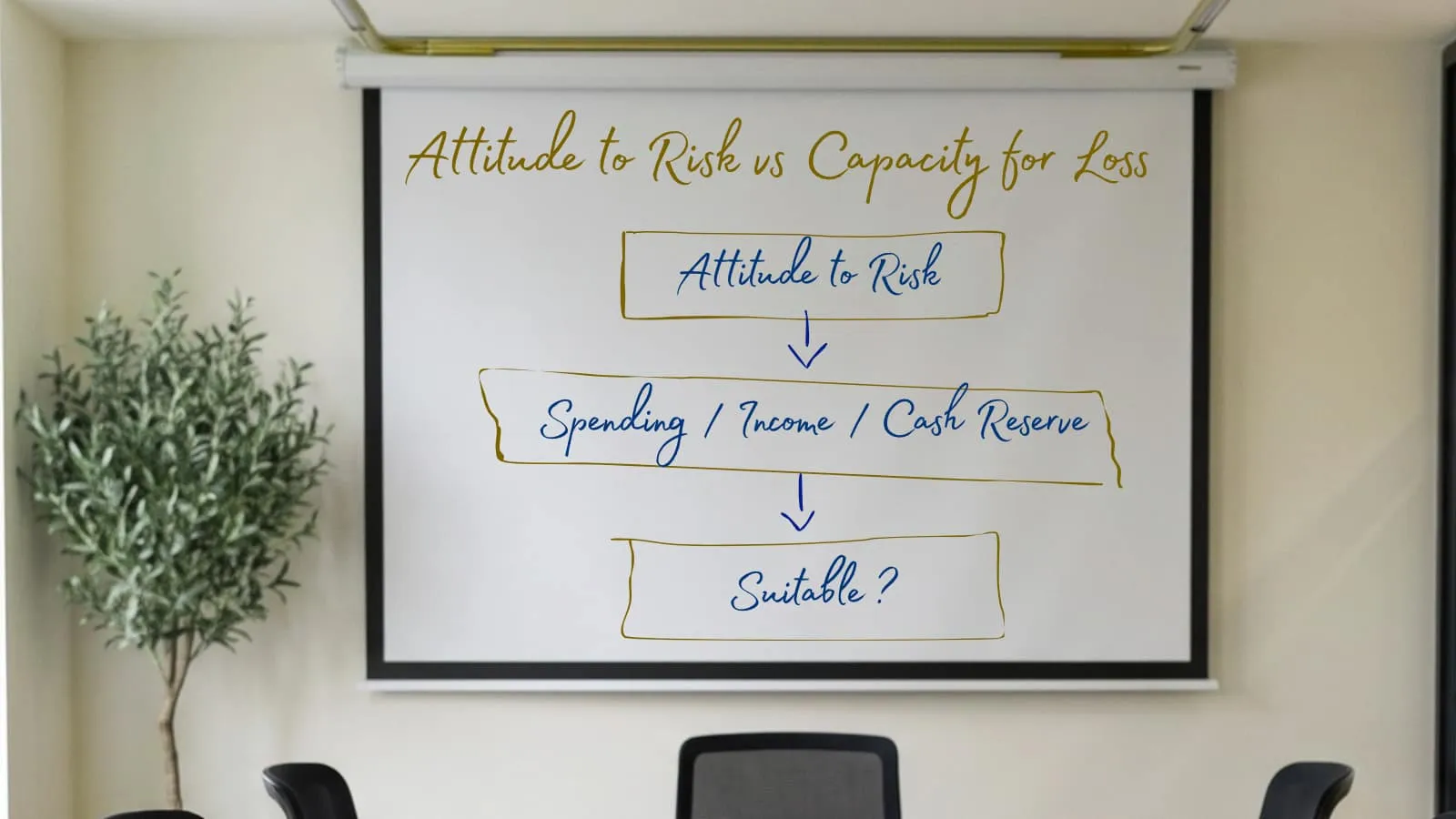
Attitude to Risk vs Capacity for Loss: Winning the Battle of Contemporaneous Evidence
26 October 2026 , 4 min
A signed risk questionnaire does not answer a complaint about losses. Capacity for loss, recorded at the time, does.
Read article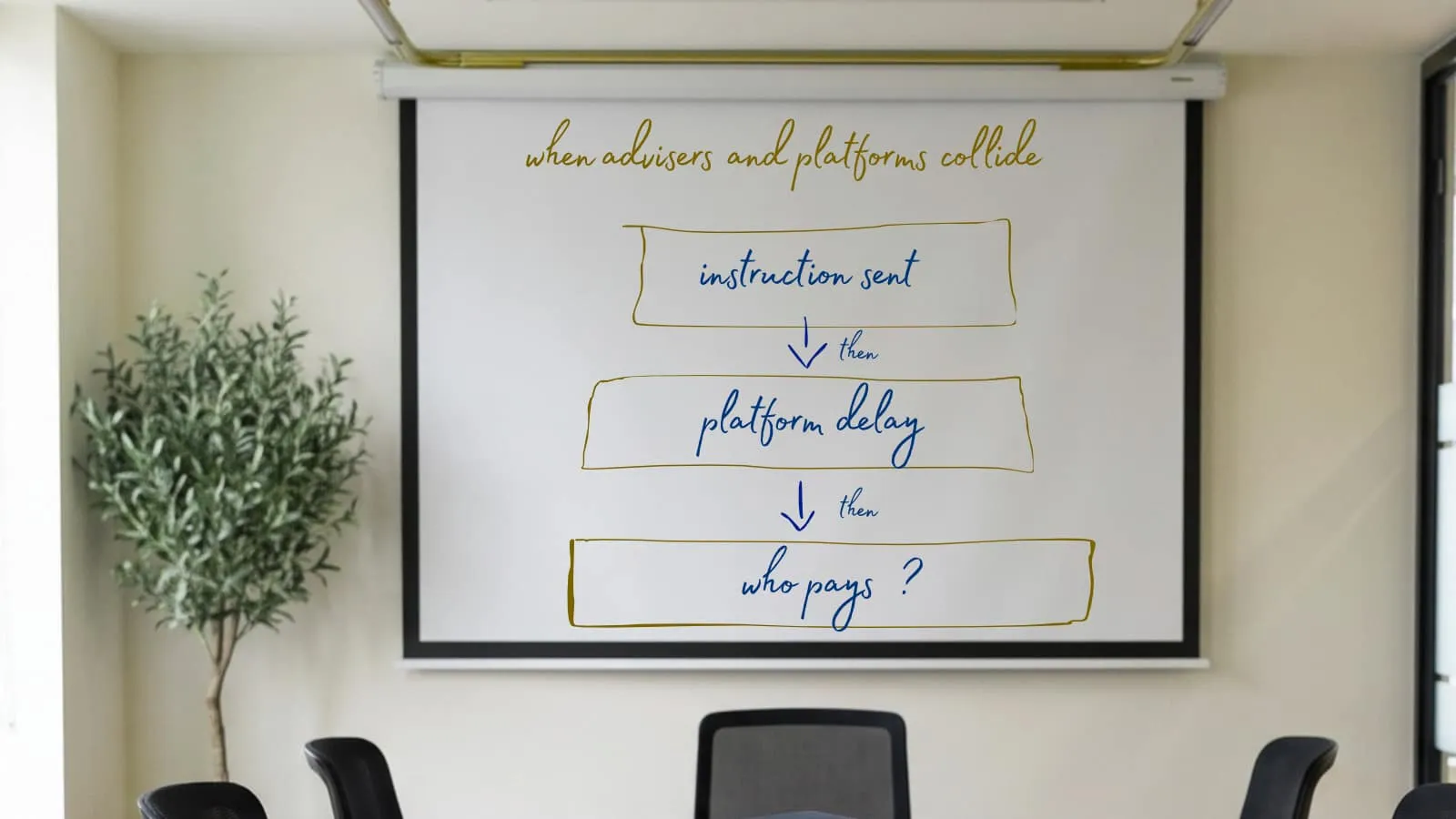
When Advisers and Platforms Collide: Defending the Boundaries of Intermediary Responsibility
26 October 2026 , 4 min
A dealing backlog at the platform is not, by itself, an advice failure. The timeline shows who had the instruction, and when.
Read article
Halting Regulatory Retrospectivity: Defending Legacy Advice Against Post-Consumer Duty Claims
26 October 2026 , 4 min
Consumer Duty language in a complaint about pre-2023 advice does not rewrite the rules that applied on the day. DISP 3.6.4R keeps the case in its own time.
Read article
SIPP Custody vs Advisory Due Diligence: Applying Adams v Options UK to Intermediary Disputes
26 October 2026 , 5 min
When a SIPP asset fails, the operator's duty and the adviser's duty are not the same duty. Adams v Options UK does not merge them.
Read article
Turning FOS Casework into Consumer Duty Root-Cause MI: Complaints as Governance Telemetry
26 October 2026 , 4 min
A falling complaint count is not root-cause information. DISP 1.3 and the Consumer Duty board report ask what kept going wrong.
Read article
Beyond Simple Cash Differences: Why Generalist Accounting Fails FCA Redress Benchmarks (FG17/9)
26 October 2026 , 4 min
Money in minus money out is not a pension redress calculation. FG17/9 and DISP App 1 require the position the client would have been in.
Read article
The Month 1 Emergency Tax Trap: Assessing True Detriment vs Temporary Cashflow Drag Under Code 1257L M1
26 October 2026 , 4 min
A Month 1 tax code can withhold thousands on a first drawdown payment. Most of that money is reclaimable. It is not automatically redress.
Read article
Benchmarking Distress and Inconvenience: Defending Against Exaggerated Non-Financial Detriment Claims
26 October 2026 , 4 min
A demand for £5,000 to £10,000 of upset, attached to an ordinary delay, sits outside the Ombudsman's published bands. The log is what places the case.
Read article
Forensic File Reviews, Complex Pension Scrutiny and Ongoing Servicing Audits
22 October 2026 , 12 min
A forensic file review tests defined benefit transfers, high-risk SIPPs and ongoing charges against COBS, SYSC and the Consumer Duty, before a regulator or ombudsman does.
Read article
Financial Crime & Unauthorised Intermediary Funnels: Spotting the "Introducer" Red Flags
20 October 2026 , 6 min
The unregulated introducer model has driven SIPP provider failures and FSCS levies for two decades. Toxic funnels leave repeatable footprints that a structured red-flag audit can find.
Read article
Decumulation Friction: Phased Drawdown, In-Specie Transfers, and Illiquid Asset Traps — When It's Not So Straightforward
18 October 2026 , 6 min
In bespoke SIPPs holding property, unquoted equities or loan notes, pension flexibility is often theoretical. Crystallising benefits without a clear cash pathway creates operational drag, Consumer Duty breaches and complaints.
Read article
SIPP Borrowing & Commercial Property: Navigating the 50% Net Asset Cap and Connected-Party Leases
16 October 2026 , 5 min
Commercial property in a SIPP or SSAS sits under intense HMRC scrutiny. Breaching the 50% borrowing cap or tolerating connected-party rent arrears triggers punitive unauthorised payment charges.
Read article
Auditing Illiquidity and Valuation: The 30-Day Standard Asset Test Under SIPP Capital Adequacy Rules
14 October 2026 , 5 min
Labelling illiquid investments as standard assets suppresses a SIPP operator's capital requirement on paper. A forensic liquidity audit tests every asset against the 30-day gate.
Read article
SIPP Operator Due Diligence: Lessons from Adams v Options UK and the FCA Due Diligence Framework
12 October 2026 , 6 min
An execution-only disclaimer no longer shields a SIPP operator. After Adams v Options UK, reviewers ask whether the operator actively vetted the asset and the distribution channel before accepting it.
Read article
Abridged Advice vs Full Advice: Managing the Boundary Under COBS 19.1A
10 October 2026 , 5 min
Abridged advice can only ever produce two outcomes. Firms that blur the boundary into full advice risk breaching the contingent charging ban and issuing invalid Section 48 confirmations.
Read article
The DBAAT File Audit: Scoring Section 166 Redress Liabilities Before the Regulator Arrives
8 October 2026 , 5 min
The FCA reviews defined benefit transfer books with the DBAAT, not narrative impressions. A single gate failure on capacity for loss or information gathering can render the whole advice outcome unsuitable.
Read article
Unpacking Scheme Solvency: Handling Employer Covenants and PPF Nuance Under COBS 19.1.2DG
6 October 2026 , 4 min
Employer covenant weakness is often used to justify an otherwise unsuitable defined benefit transfer. COBS 19.1.2DG sets clear limits on how scheme solvency and PPF compensation are presented.
Read article
Stress-Testing the APTA & TVC: When Stochastic Cashflow Models Cross into "Wishful Thinking"
2 October 2026 , 5 min
Cashflow modelling is one of the most heavily scrutinised parts of a defined benefit transfer file. Optimistic stochastic models are often used to paper over structural cracks in transfer sustainability.
Read article