Decumulation Friction: Phased Drawdown, In-Specie Transfers, and Illiquid Asset Traps — When It's Not So Straightforward

Trapped in trust: auditing decumulation friction, in-specie mechanics, and liquidity traps in bespoke SIPPs
The introduction of pension freedoms transformed defined contribution decumulation, popularising Flexi-Access Drawdown (FAD) and Uncrystallised Funds Pension Lump Sums (UFPLS).
However, in bespoke SIPPs holding physical commercial real estate, unquoted equities, or private market loan notes, flexibility is often theoretical.
When a member reaches normal minimum pension age and requests their statutory 25% Pension Commencement Lump Sum (PCLS) or sets up monthly drawdown income, they frequently collide with the illiquidity trap.
For compliance officers and operations managers, poorly planned crystallisations in asset-rich but cash-poor SIPPs generate material operational drag, Consumer Duty breaches (PRIN 2A.2 foreseeable harm), out-of-market losses, and contentious complaints.
The File Review Failure: Crystallising Without Clear Cash Pathways
These are the three recurrent operational and advisory failures identified during the decumulation phase of complex SIPPs.
The “unfunded PCLS” crystallisation
Advisers crystallising an entire commercial property or unquoted portfolio to create a designated drawdown fund, without first establishing where the liquid cash to pay the 25% PCLS will come from. This leaves the client with a large tax expectation, while the platform cannot pay out funds until the underlying physical asset is sold or refinanced.
The in-specie valuation drag
Executing an in-specie benefit distribution or pension-sharing transfer without securing a certified, contemporaneous valuation. Valuing illiquid assets based on historical book cost or outdated year-end accounts breaches HMRC benefit crystallisation rules and miscalculates Lump Sum Allowance (LSA) usage.
Disproportionate liquidation charges on ancillary assets
Liquidating all liquid, high-performing equity funds to meet ongoing income payments while leaving an illiquid property intact, unbalancing the portfolio asset allocation and creating extreme cash drag or single-asset concentration risk.
Auditing Decumulation Design: The Cash-Buffer and Settlement Lifecycle
A compliant decumulation file must evidence that liquidity management was engineered prior to executing any benefit crystallisation.
Step 1: Liquidity and outgoings audit
Quantify the immediate PCLS liability, plus 24–36 months of planned drawdown income, plus upcoming trustee, DFM, and adviser fees.
Step 2: Asset realisability analysis
Are underlying assets liquid (OEICs/ETFs: T+2 to T+4) or illiquid (property/unquoted: months or years)?
Step 3: Segregated cash-buffer architecture
Ring-fence a rolling 2-year cash or near-cash reserve within the SIPP bank account prior to crystallisation, to insulate the client from sequence-of-returns and illiquidity risk.
Step 4: Execution and statutory disclosures
Confirm Lump Sum Allowance (LSA) capacity and issue mandatory pre-crystallisation warnings regarding HMRC Month 1 emergency tax codes.
What Are the Key Audit Touchpoints?
The cash-buffer stress test
It’s important to evaluate whether the SIPP holds an adequate liquid buffer. If a client is drawing £1,500 monthly from a SIPP whose only holding is a warehouse leased to a third party, what happens if the tenant enters administration or withholds rent? If the SIPP administrator lacks cash to pay benefits, the platform must freeze payments, directly harming the consumer.
In-specie transfer governance
Where an illiquid asset is transferred in-specie to satisfy a Pension Sharing Order (PSO) on divorce or to facilitate a transfer to another SIPP provider, a check must be made for statutory valuation compliance. Under HMRC rules and COBS 19.8, the asset must be valued at its fair market mid-price or via an independent certified appraisal immediately prior to the transfer day.
Emergency tax signposting (Consumer Duty PRIN 2A.5)
When paying out large lump sums or commencing first drawdown withdrawals, auditors check whether the client was explicitly warned about HMRC Month 1 emergency tax deductions (Code 1257L M1). Omitting this warning violates Consumer Duty transparency requirements when the client unexpectedly receives significantly less than the requested net amount.
Summary
Crystallising benefits within a bespoke SIPP is not a clerical form-filling exercise; it is an operational and financial risk event. As such, files must demonstrate clear cashflow and liquidity forecasting to ensure client income needs can be serviced without forcing emergency property fire-sales.
Other insights

Forensic File Reviews, Complex Pension Scrutiny and Ongoing Servicing Audits
22 October 2026 , 12 min
A forensic file review tests defined benefit transfers, high-risk SIPPs and ongoing charges against COBS, SYSC and the Consumer Duty, before a regulator or ombudsman does.
Read article
Financial Crime & Unauthorised Intermediary Funnels: Spotting the "Introducer" Red Flags
20 October 2026 , 6 min
The unregulated introducer model has driven SIPP provider failures and FSCS levies for two decades. Toxic funnels leave repeatable footprints that a structured red-flag audit can find.
Read article
SIPP Borrowing & Commercial Property: Navigating the 50% Net Asset Cap and Connected-Party Leases
16 October 2026 , 5 min
Commercial property in a SIPP or SSAS sits under intense HMRC scrutiny. Breaching the 50% borrowing cap or tolerating connected-party rent arrears triggers punitive unauthorised payment charges.
Read article
Auditing Illiquidity and Valuation: The 30-Day Standard Asset Test Under SIPP Capital Adequacy Rules
14 October 2026 , 5 min
Labelling illiquid investments as standard assets suppresses a SIPP operator's capital requirement on paper. A forensic liquidity audit tests every asset against the 30-day gate.
Read article
SIPP Operator Due Diligence: Lessons from Adams v Options UK and the FCA Due Diligence Framework
12 October 2026 , 6 min
An execution-only disclaimer no longer shields a SIPP operator. After Adams v Options UK, reviewers ask whether the operator actively vetted the asset and the distribution channel before accepting it.
Read article
Abridged Advice vs Full Advice: Managing the Boundary Under COBS 19.1A
10 October 2026 , 5 min
Abridged advice can only ever produce two outcomes. Firms that blur the boundary into full advice risk breaching the contingent charging ban and issuing invalid Section 48 confirmations.
Read article
The DBAAT File Audit: Scoring Section 166 Redress Liabilities Before the Regulator Arrives
8 October 2026 , 5 min
The FCA reviews defined benefit transfer books with the DBAAT, not narrative impressions. A single gate failure on capacity for loss or information gathering can render the whole advice outcome unsuitable.
Read article
Unpacking Scheme Solvency: Handling Employer Covenants and PPF Nuance Under COBS 19.1.2DG
6 October 2026 , 4 min
Employer covenant weakness is often used to justify an otherwise unsuitable defined benefit transfer. COBS 19.1.2DG sets clear limits on how scheme solvency and PPF compensation are presented.
Read article
Stress-Testing the APTA & TVC: When Stochastic Cashflow Models Cross into "Wishful Thinking"
2 October 2026 , 5 min
Cashflow modelling is one of the most heavily scrutinised parts of a defined benefit transfer file. Optimistic stochastic models are often used to paper over structural cracks in transfer sustainability.
Read article
Consumer Duty Governance, Outcome MI and SM&CR Assurance
1 November 2026 , 11 min
Principle 12 asks for contemporaneous proof of customer outcomes. Activity statistics, dealing SLAs and a green dashboard do not provide it.
Read article
Decumulation Telemetry: Tracking SIPP Drawdown Lag as Foreseeable Harm
1 November 2026 , 9 min
A 48-hour dealing SLA can hide three or four weeks between a drawdown instruction and cleared money. That gap is a foreseeable-harm question under PRIN 2A.2.
Read article
The 31-Day MPAA Trap: Monitoring Statutory Trigger Disclosures in Flexi-Access Drawdown
1 November 2026 , 8 min
The Money Purchase Annual Allowance starts when taxable income is paid. The scheme administrator then has 31 days to tell the member. A document sitting in a portal is not that notice.
Read article
Fixed-Fee Erosion in Low-Value SIPP Pots: When Administration Fees Breach Fair Value
1 November 2026 , 8 min
A flat trustee fee that is trivial on a large SIPP can consume several % of a residual pot. PRIN 2A.4 looks at that cohort, not the average charge across the book.
Read article
Strategic FOS Defence, Dispute Resolution and Forensic Redress Modelling
27 October 2026 , 11 min
A practical account of high-stakes complaints: eight-week final responses, DISP 2.8 time-bars, preliminary-view rebuttals and redress modelled to the FCA benchmarks.
Read article
The Jurisdictional Shield: Enforcing DISP 2.8 Time Limits Against Stale Claims
26 October 2026 , 4 min
A complaint about advice given eight or ten years ago is often a jurisdiction question before it is a suitability question. DISP 2.8.2R is the test.
Read article
Rebutting the Ombudsman Investigator's Preliminary View: The Mechanics of an Effective Escalation
26 October 2026 , 4 min
An adverse preliminary view is not the decision. It is a document that can be taken apart where it uses hindsight or misreads the product.
Read article
The 8-Week Final Response Letter: Drafting for the Ombudsman, Not Just the Client
26 October 2026 , 4 min
The eight-week letter is the brief the Ombudsman will read. An apology that concedes a breach is very hard to row back.
Read article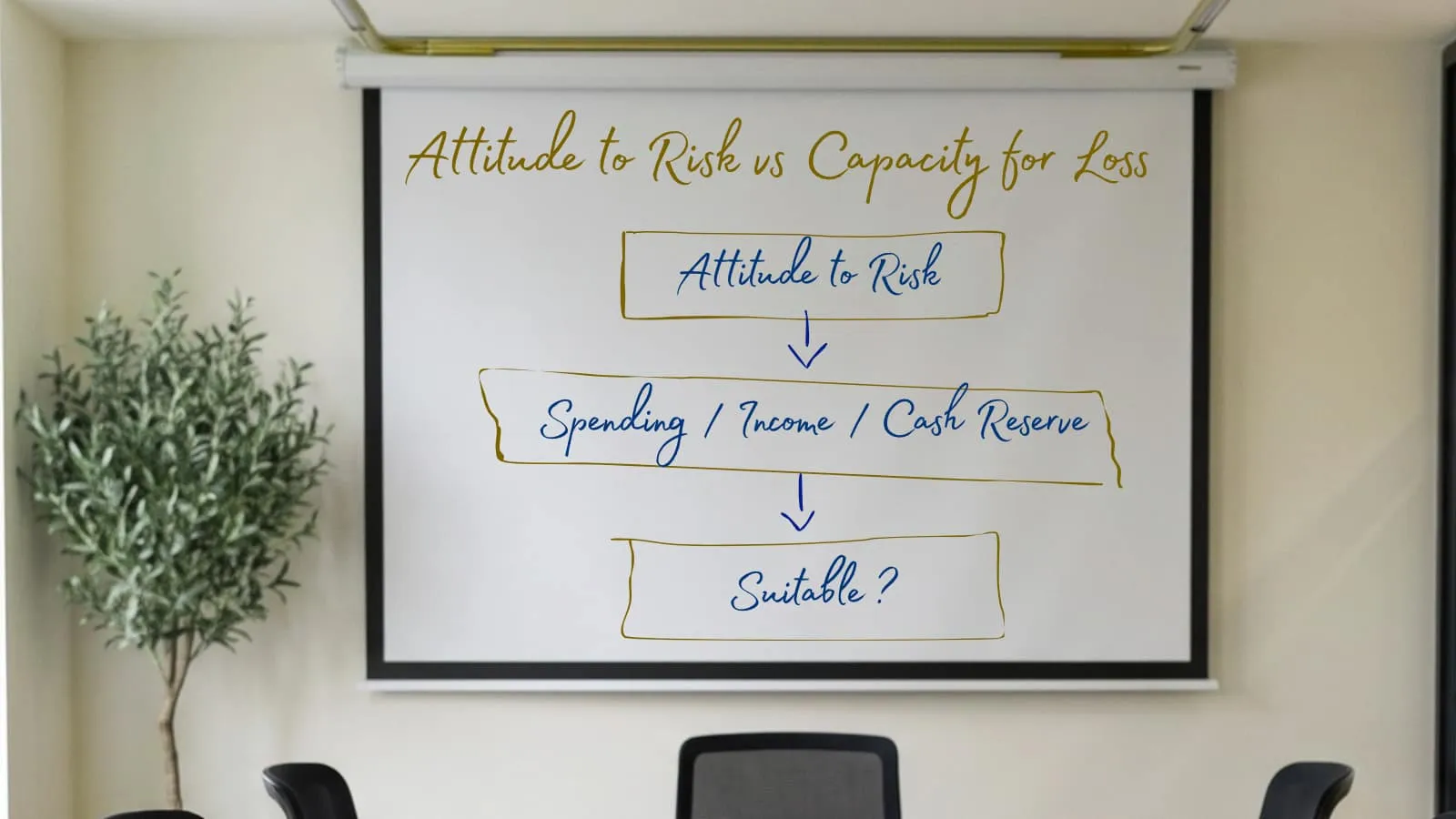
Attitude to Risk vs Capacity for Loss: Winning the Battle of Contemporaneous Evidence
26 October 2026 , 4 min
A signed risk questionnaire does not answer a complaint about losses. Capacity for loss, recorded at the time, does.
Read article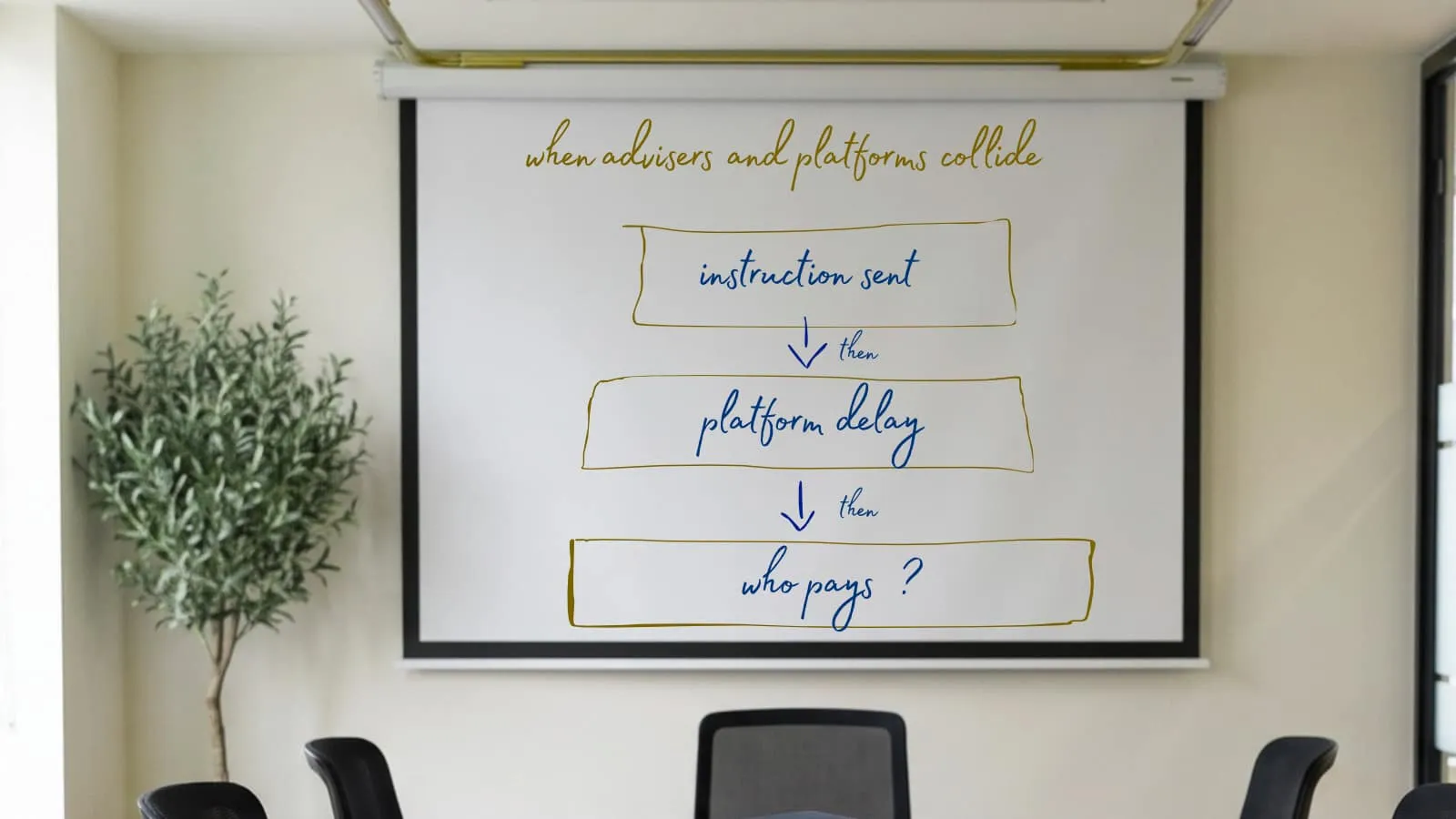
When Advisers and Platforms Collide: Defending the Boundaries of Intermediary Responsibility
26 October 2026 , 4 min
A dealing backlog at the platform is not, by itself, an advice failure. The timeline shows who had the instruction, and when.
Read article
Halting Regulatory Retrospectivity: Defending Legacy Advice Against Post-Consumer Duty Claims
26 October 2026 , 4 min
Consumer Duty language in a complaint about pre-2023 advice does not rewrite the rules that applied on the day. DISP 3.6.4R keeps the case in its own time.
Read article
SIPP Custody vs Advisory Due Diligence: Applying Adams v Options UK to Intermediary Disputes
26 October 2026 , 5 min
When a SIPP asset fails, the operator's duty and the adviser's duty are not the same duty. Adams v Options UK does not merge them.
Read article
Turning FOS Casework into Consumer Duty Root-Cause MI: Complaints as Governance Telemetry
26 October 2026 , 4 min
A falling complaint count is not root-cause information. DISP 1.3 and the Consumer Duty board report ask what kept going wrong.
Read article
Beyond Simple Cash Differences: Why Generalist Accounting Fails FCA Redress Benchmarks (FG17/9)
26 October 2026 , 4 min
Money in minus money out is not a pension redress calculation. FG17/9 and DISP App 1 require the position the client would have been in.
Read article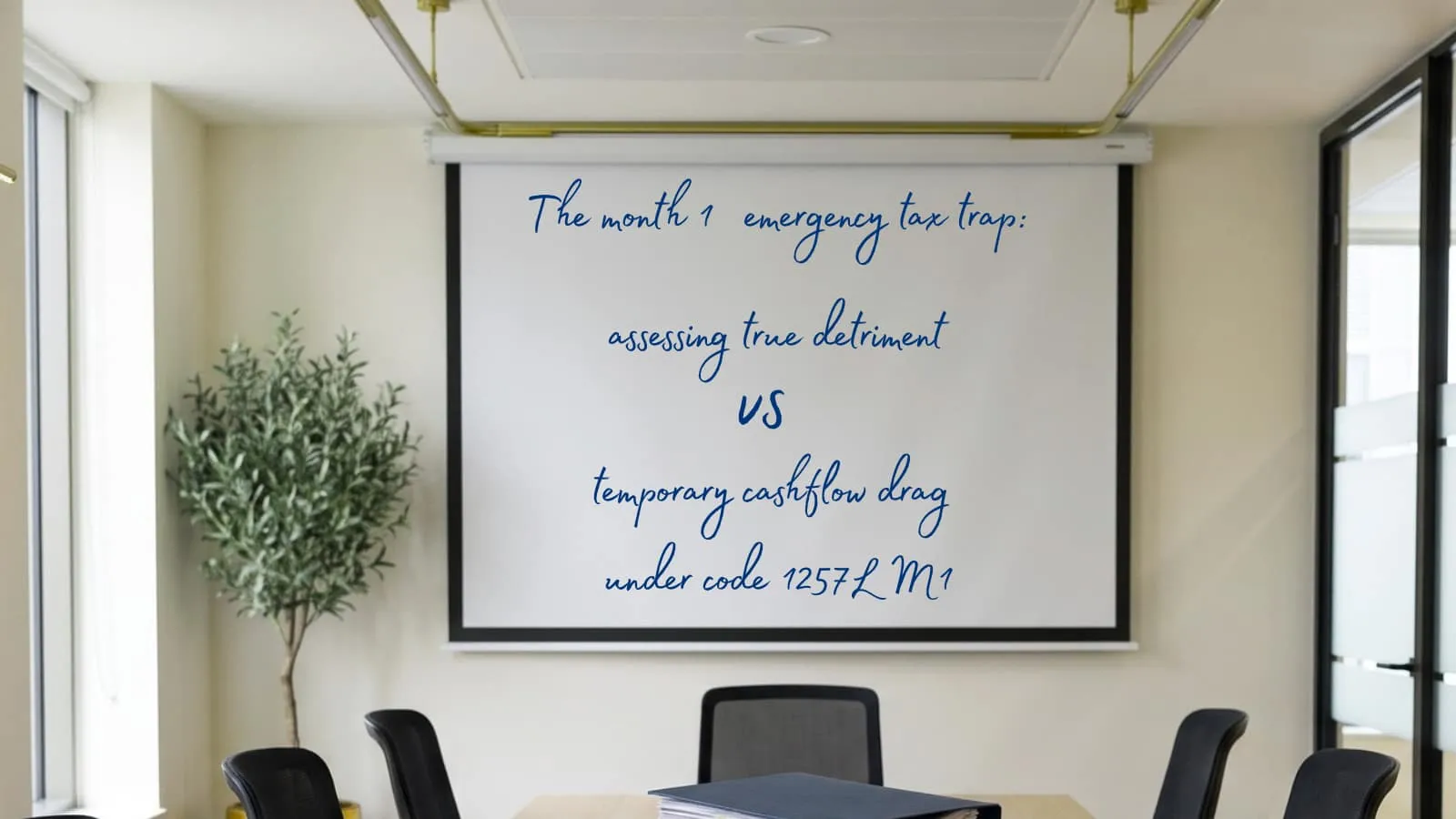
The Month 1 Emergency Tax Trap: Assessing True Detriment vs Temporary Cashflow Drag Under Code 1257L M1
26 October 2026 , 4 min
A Month 1 tax code can withhold thousands on a first drawdown payment. Most of that money is reclaimable. It is not automatically redress.
Read article
Benchmarking Distress and Inconvenience: Defending Against Exaggerated Non-Financial Detriment Claims
26 October 2026 , 4 min
A demand for £5,000 to £10,000 of upset, attached to an ordinary delay, sits outside the Ombudsman's published bands. The log is what places the case.
Read article